Solar

solar panels for businesses

Top 7 Benefits of Solar Panels for Businesses

We’ve talked about the many benefits homeowners can enjoy by getting solar panels, but the advantages of going solar don’t limit to your home. If you’re a business owner, going solar can also be a smart choice that can offer your business more benefits than saving costs in bills. Let’s look at some advantages of getting solar panels for your business. Top 7 Benefits of Solar Panels for Businesses Access to Financial Incentives Like residential solar adopters, businesses have access to financial incentives, rebates, and tax credits that can significantly offset the initial costs and accelerate the payback period. Among these programs are the Canadian Government’s Accelerated Investment Incentive and the tax credits for renewable energy, Alberta’s Clean Energy Improvement Financing Program, and the Emissions Reduction Alberta Program (this option was closed by the time of writing this article, but you can join the waitlist!) Reduced Operating Expenses As mentioned above, the main attraction of solar energy for commercial purposes is paying less in bills over time, contributing to reduced operating expenses. That extra cash can be invested in other critical areas such as product development, employee benefits, marketing and customer retention strategies or business expansion. Energy Independence and Stability Businesses that produce their energy become less reliant on the electrical grid and are less susceptible to the frequent fluctuations in energy prices. This enhances energy price stability and provides a degree of energy independence. Mitigating Risks Associated with Fossil Fuel Price Volatility From transportation logistics and supply chain issues to uncertainty in budgeting and planning, price volatility can severely disrupt your operations if you depend on fossil fuels for your main business activities. By making solar your main energy source, you can mitigate the risks related to fossil fuel price fluctuations and ensure your business’s operational efficiency, stability and competitiveness. Positive Brand Image and Marketing Opportunities Going solar can enhance a business’s brand image, especially among environmentally conscious customers. It provides marketing opportunities to showcase the company’s commitment to sustainability, potentially attracting new clients and investors. Increased Property and Business Value If you own your business facilities, solar installations are seen as valuable assets that can increase the property’s market value. In addition to that, going solar can position your business as forward-thinking and technologically advanced. This positive perception can attract new customers, skilled talent, and collaboration opportunities with like-minded organizations. It’s a Low Maintenance, Long-Term Business Asset Once installed, your solar system will power your business activities for at least 20 years or more, with little to no maintenance to keep its performance. Adopting solar provides businesses with stability and predictability in energy costs over an extended period, which can support the growth of your business as a whole. Solar Panels for Businesses In Action There’s no better way to showcase how solar panels benefit a business than with a real-life example. Gasonic is an Albertan indoor air-quality small business that wanted to go solar in 2021 and chose Solar YYC to install a solar system that would produce enough energy for their offices and charge their fleet of electric vehicles. Gasonic’s CEO, Kae Shummoogum, monitored the system’s energy production and only five months after the installation, it had produced enough energy to drive around the world.  You can see more details regarding the installation and Kae’s testimonial here: Solar Accompanies Your Business Growth  Going solar is an investment that can become a valuable asset for your business that will pay itself in a few years. Businesses of all sizes can enjoy the independence, resilience and positive image that being a solar-powered business can provide. If you own a Calgary-based business and want to know what a system tailored to your energy needs would look like or have more questions regarding solar energy, contact us.
monocrystalline vs polycrystalline solar panels

Monocrystalline vs Polycrystalline Solar Panels Comparison: Which One Is Best?

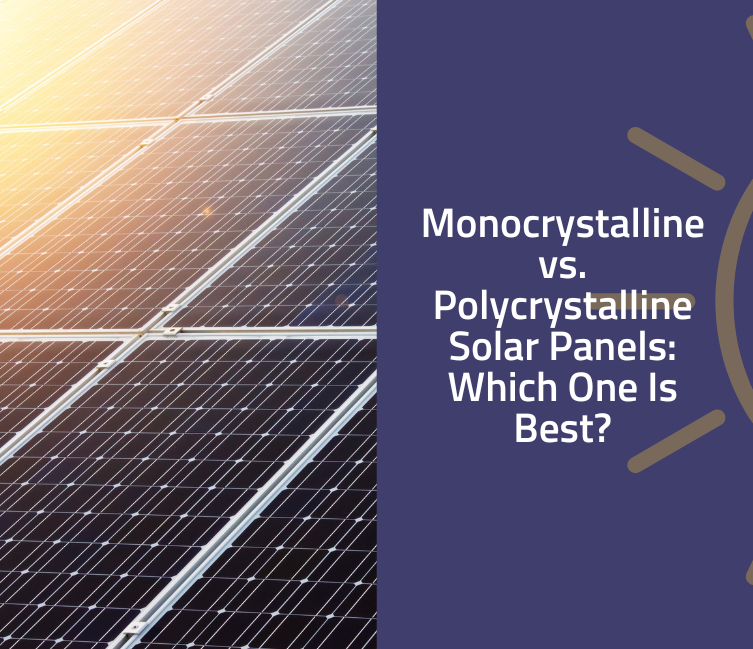
The solar industry is dynamic and diverse, with new technology developments emerging since the establishment of companies specializing in solar energy in the 1980s, thus resulting in a vast number of components and devices to help businesses and households power their daily activities more efficiently. This is especially true regarding solar panels, as several types of panels in the market serve different needs and budgets. Still, two types are the most commonly used due to their versatility and performance: monocrystalline and polycrystalline solar panels.  If you want to go solar and are currently researching the panel options available, then keep reading because we will put monocrystalline and polycrystalline solar panels side by side and compare them so you can make an informed decision. Monocrystalline vs. Polycrystalline Solar Panels Comparison  Monocrystalline Solar Panels These panels are made of monocrystalline silicon, which is the semiconductor material. The key feature of monocrystalline solar panels is that they are constructed from a single, uniform crystal structure of high-purity silicon, which makes them the most efficient in turning sunlight into electricity. Here are the main characteristics of monocrystalline solar panels:  Monocrystalline solar panels (Linquip.com) Due to their high performance and long lifespan, these are the type of panels we use for our installations. Polycrystalline Solar Panels Unlike monocrystalline solar panels, which are made from a single crystal structure, polycrystalline (or multi-crystalline) panels are produced by melting multiple silicon fragments and casting them into molds. These are the main features to look for in polycrystalline panels: Despite the lower efficiency of lower-purity silicon, polycrystalline solar panels remain a popular and cost-effective choice for many solar installations. Technological advancements continue to improve the performance of polycrystalline panels, making them competitive with other solar panel alternatives. So, Should You Choose Monocrystalline or Polycrystalline Solar Panels? When deciding which solar panels to use for your project, the answer isn’t cut and dry. Technological advancements continue to improve the performance of polycrystalline panels, making them competitive with their monocrystalline counterparts. It’s essential to consider your specific application needs, available space, and budget constraints when choosing between one type of panel over another.  If you need extra help to choose the ideal panels, we’re here to help. Contact us to book a free, no-obligation consultation, and our experts will guide you through your solar journey.

home solar system maintenance

The Ultimate Home Solar System Maintenance Guide

Many people ask us about home solar system maintenance, and we’re always pleased to tell our clients that we look after that for them. However, if you have solar panels from another installer and they do not offer care and maintenance, or you did the installation on your own, here is what you need to know. Do Home Solar Systems Need Extensive Maintenance? Before we start with the actual maintenance guide, we need to clarify that solar panels generally don’t need much maintenance. However, homeowners must know what signs they must be aware of and how to perform maintenance work if needed. Home Solar System Maintenance Guide: 7 Steps to Keep Your Panels Up and Running 1 – Cleaning Most of the time, rain will take care of cleaning your panels, but it’s a good idea to do a deep cleaning at least twice a year to remove dust or debris accumulation, especially when it isn’t raining much. If you see an energy production drop, cleaning your panels will likely solve the problem.  Use this method to clean the panels: If your panels are on the roof and you don’t like the idea of going up there, consider hiring a professional cleaning company. 2 – Monitor Energy Production Look at the energy production of your solar panels regularly. If you notice a significant drop in power output, it could indicate a problem that needs attention. If your solar panel system has monitoring software, use it to track performance and identify any issues. 3 – Shade Management Trim or prune trees and vegetation that may cast shadows on your solar panels, as shading can significantly reduce energy production.  4 – Check Inverter Performance The inverter turns the direct current (DC) produced by the solar panels into the Alternate Current (AC) power you use in your home. Regularly check the inverter’s readings and make sure it is functioning properly. If the inverter displays error messages, consult the user manual, contact the manufacturer if you did the installation, or reach out to your installer company for guidance. 5 – Record Tracking Record your maintenance activities, including cleaning dates, any issues observed, and repairs made. This log can be useful for future reference and warranty claims.  6 – Warranty Review Familiarize yourself with the warranty terms of your solar panels. Some warranties may require specific maintenance practices to remain valid. 7 – Other Considerations Owning Solar Panels Is Easy Solar panels are a low-maintenance investment that has many benefits. Although they won’t require much effort to keep them in good condition, you must know how to troubleshoot if needed. If you need further assistance, don’t hesitate to get in touch with us.

Half-cut vs full solar panel cells

Half-Cut vs. Full Solar Panel Cells: What’s The Difference?

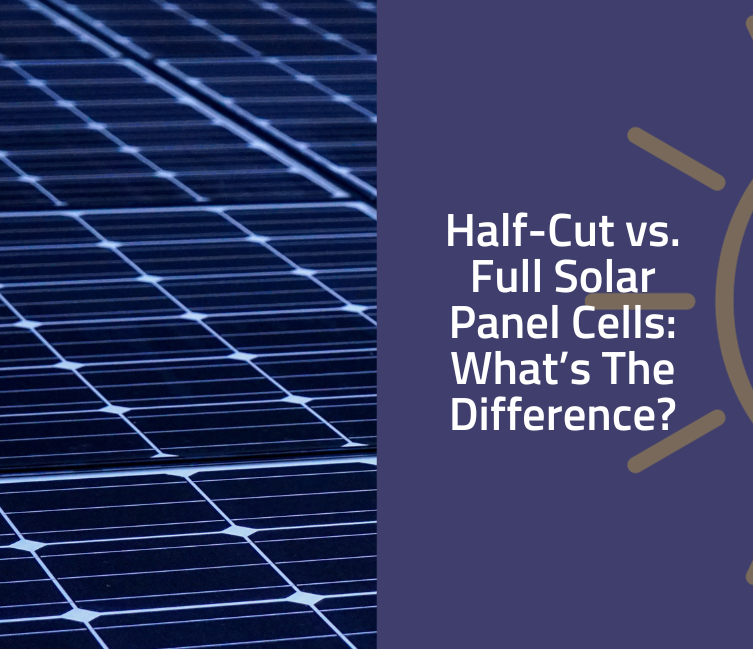
Photovoltaic (PV) cells are a fundamental piece of how solar panels produce energy as they’re in charge of absorbing the sunlight that will turn into electricity. And the constant technological advancements looking for ways to make PV cells more efficient while keeping the costs in check has led to the development of different types of solar cells.  This time, we’re going to focus on half-cut and full solar panel cells, how they work, and making a comprehensive comparison so you can know how to choose which one will be the most suitable for your needs.  First, What’s a Solar Cell? A solar cell is a device made of a semiconductor material (typically silicone) that turns sunlight into electrical current through a physical process called the photovoltaic effect. Solar cells are the primary building blocks of solar panels, but a single one can’t produce enough energy, so panels are made with several cells arranged together.  The number of cells in a solar panel typically ranges from 36 to 144 cells or more, and this amount varies for several reasons, including design considerations, desired voltage and current output, efficiency goals, and the specific requirements of the installation. For residential installations, 60-cell panels are the most common, while businesses and bigger projects use panels with 72 cells or more. What Are Full Solar Panel Cells? Full-cell panels use standard-sized solar cells without cutting them. They typically have fewer cells than half-cut cell panels, as the most common full-cell panels on the market tend to have between 60 and 72 cells. What Are Half-Cut Solar Panel Cells? Half-cut solar cells, as the name suggests, are solar cells that have been physically cut in half. This process is done by dividing a standard-sized solar cell into two equal parts. Half-cut solar cells are a technology innovation developed by REC Solar back in 2014 as a way to increase energy production performance.  Cutting the cells in half results in twice as many cells in a panel compared to full-cell panels. For example, a standard panel might have 60 cells, while a half-cut cell panel could have 120 half-cells. Half-Cut vs Full Solar Panel Cells Differences Now that we have covered PV cells’ functionality and the definition of full and half-cut cells let’s dive into the main differences between them: 1 – Electrical Resistance Electrical resistance refers to the opposition to the flow of electric current through the material or components of the cell. In solar cells, electrical resistance can translate into energy loss and reduced efficiency. Half-cut cells have lower electrical resistance than standard cells, which can reduce power loss due to resistance in the panel’s internal wiring and connections. 2 – Shading Tolerance Shading is a critical variant that can significantly impact the energy output of solar panels, as even a slight shadow can compromise the overall efficiency of the solar system.  Conventional PV cells are more sensitive to shading. Even if a portion of a cell is shaded, it can significantly reduce the panel’s power output because the entire cell is affected. In opposition, half-cut cells tend to tolerate better shading conditions. If one part of a half-cut cell is shaded, it has a smaller impact on the overall panel’s performance because the cells are divided into smaller sections. 3 – Heat Generation While heat generation is a normal aspect of their operation, solar panels that operate at lower temperatures tend to have improved efficiency, reliability, and longevity while minimizing the risk of hotspots that can potentially damage the solar cells or cause complete failure.  Traditional cells often generate more heat than their half-cut counterparts for several reasons, including higher resistance, size, and higher current levels. Half-cut cells generate less heat because they have lower resistance and less material to heat up, thus absorbing less energy and retaining less heat. 4 – Reliability Due to their lower operating temperatures and reduced electrical resistance, half-cut cell panels may have a longer lifespan and higher reliability than full-cell panels. While full-cell panels are still reliable, they may not have the same longevity as the half-cut cell ones. 5 – Cost Half-cut cell panels are generally more expensive due to the additional processing required to cut the cells in half. However, their improved efficiency and longevity can make them cost-effective in the long run compared to the initial cost savings full cells may offer.  The Final Take While both types of solar cells have their uses and advantages depending on the specific installation requirements and the project’s goal, you’ll make the best of your investment by investing in half-cut solar panel cells.  We at Solar YYC use panels with half-cut cell technology in our installations because they offer a high-level performance and long-term reliability that standard cells can’t match. If you want to know more about solar panel technology and how much energy a solar system adapted to your needs can produce, reach out and book a free consultation.

What's a solar club

What’s a Solar Club? A Great Way to Save More With Solar

Going solar is a versatile way to reduce your utility bills and earn extra income. We’ve covered what carbon offset credits are and how you can sell yours. Still, there are other ways to get extra cash for the excess energy your panels may produce: joining a solar club. We will cover what’s a solar club, how they work and why you should join one. What’s a Solar Club? In short, solar clubs are programs designed to help micro-generators (residential, commercial or farms) earn money for the excess energy they produce by selling it back to the grid. Most solar club programs offer flexible rate plans that will pay micro-generators depending on how much power they export and adapt to the seasonal energy production fluctuations. How to Join a Solar Club The process to sign up for a solar club is pretty simple and standard: How You Make Money With Solar Clubs Most solar clubs offer two rates to compensate their members for the excess energy their panels produce: High Export Rate and Low Export Rate. The rate you choose will depend on how much energy your system is sending back to the grid.  Since the amount of energy solar panels produce tends to fluctuate throughout the year, solar clubs offer their members the flexibility to switch between rates to adjust to seasonal fluctuations. In practice, you may sign up for the High Export rate during the summer months and change to the Low Export rate in the winter. Solar clubs pay in cents per every kWh put back into the grid, and you’ll see how much you get paid back in your utility bill. Start Improving Your Solar Savings Today Solar clubs are a practical way to take advantage of your solar panels. The signup process is quick, and long-term benefits are worth it. If you don’t have a solar system yet, start the process today and book a free consultation to get an estimate of how much you can save in bills.

Carbon Offset Credits

Carbon Offset Credits: How To Earn Extra Income With Your Solar Panels

Our modern lifestyle has made our lives easier, but it also had a negative impact on Earth’s resources. While countries commit to contributing to preserve nature and reducing their carbon footprint, there’s still a long way to go to start seeing a positive change, and many industries have a hard time adjusting their operations to be more eco-friendly. Adopting clean and renewable energy sources like solar is one of the most impactful ways we have to keep powering our daily activities while helping reduce global warming, and small generators such as homes with solar panels can have a bigger impact with the energy they produce while earning some money in the process thanks to carbon offset credits. We will cover these credits, how they work, and how you can sell them. What Are Carbon Offset Credits? Carbon offset credits are instruments issued by governments or environmental agencies that allow the owner to emit a determined amount of greenhouse gases; one carbon offset credit is the equivalent of one metric tonne of CO2. One offset credit is created every time a clean energy system produces energy, avoiding carbon emissions. These credits are typically traded on carbon markets. They can be purchased by individuals, businesses, or governments to compensate for their own emissions, thus helping to combat climate change by “neutralizing” their carbon footprint. To ensure the offset credit system’s integrity, the emissions reduction achieved by projects or activities powered by clean energy are measured and verified by independent organizations to ensure that the claimed reductions are accurate and additional (meaning they wouldn’t have occurred without the offset project). Once a credit is used to offset emissions, it is retired, ensuring it cannot be double-counted.  Carbon offset credits are a valuable tool for addressing climate change, especially when reducing emissions in specific sectors or activities is challenging or expensive. Now that you know what carbon credits are, let’s explore how small clean energy producers can sell their carbon credits for extra income. How to Earn Money Selling Your Carbon Offset Credits Before you start earning money with your carbon credits, here are some considerations: Getting involved in the carbon credit offset market is time-consuming and requires extensive trading knowledge, which is why many micro-generators or people with smaller clean-energy projects choose to work with broker firms specialized in carbon credit trading. These companies audit, register, and sell the credits on your behalf for a commission fee, making it easier for individuals to participate in the carbon offset markets. Thanks to the rise of the carbon credit market in recent years, there are many companies that can help you sell your carbon credits. In Alberta, Solar Offset and Green Alberta Energy are good options to consider. Going Solar Is a Win-Win Getting solar panels is an investment that offers you more than saving money in bills. Earning money by selling the carbon offset credits your solar system produces can be a financially rewarding venture with a promising future, as companies and countries that can’t reduce their gas emissions are turning to carbon credits to meet their environmental obligations more than ever. If carbon credits are not a good fit for your interests, there are more ways to earn money with solar. Next, we will cover all you need to know about solar clubs and how you can take advantage of them.

solar panel tiers

Solar Panel Tiers: What Homeowners Need to Know

In your research before getting solar panels, you’ll find out that not all solar panels are the same and that a tier system created by BloombergNEF classifies panels based on their quality, efficiency, and manufacturer reputation. This article will explore the solar panel tiers to help you identify and choose the best solar panels for your specific needs.  The Ins and Outs Of The Solar Panel Tier System  Tier 1 Tier 1 solar panels refer to high-quality solar panels manufactured by well-established and reputable companies in the industry. These manufacturers typically have a strong track record of producing reliable and efficient solar panels. These are some key features solar panels should have to be considered tier 1: As of 2023, examples of companies that are considered tier 1 are LONGi, Sunpro Power, and Huasun. We at Solar YYC use LONGi solar panels in our installations. Tier 2 Although BloombergNEF didn’t create criteria to classify tier 2 solar panels, people in the industry needed a way to describe the panels that didn’t match tier 1 characteristics; hence, tiers 2 and 3 were created. Tier 2 panels are typically produced by smaller or less established manufacturers than Tier 1 manufacturers in the solar industry. While they may offer competitive pricing, Tier 2 panels are associated with certain risks and characteristics: Tier 3 Tier 3 solar panels are typically considered the lowest tier or category of solar panels. These panels are produced by young companies with smaller market presence and fewer resources than Tier 1 and Tier 2 manufacturers. Here are some characteristics and considerations associated with Tier 3 solar panels: The Choice Is Yours While tier 2 and tier 3 solar panels offer cost savings, assessing and understanding their potential risks is crucial. In some cases, these panels may be suitable for specific applications, particularly when budget constraints are a significant consideration. However, going solar is usually a long-term investment, which is why reliability and performance should be on top of mind when choosing your panels.  In all cases, consulting with a knowledgeable solar installer will help you make the best decision based on your needs and circumstances. If you are in the Calgary area and need to know more about solar panel tiers or any other questions regarding solar energy, contact us to book a free consultation.

solar energy and electric vehicles

Solar Energy and Electric Vehicles: The Perfect Combination

As more people become environmentally conscious, going solar and switching to a hybrid or electric car is one of the first steps to reduce their carbon footprint, and that’s not a coincidence. Solar energy and electric vehicles (EVs) are often considered a perfect combination to allow individuals and businesses to contribute to a more sustainable and environmentally responsible future while enjoying the financial benefits of these alternative ways of supporting their main activities. Why Solar Energy and EVs Are a Perfect Match 1 – Clean Energy Synergy Solar is a clean and renewable energy source that produces electricity without greenhouse gas emissions. Electric vehicles are also environmentally friendly, producing zero tailpipe emissions. When you charge your EV with solar-generated electricity, you create a clean energy cycle, significantly reducing your carbon footprint. 2 – Healthier Environment If you want to make a difference in taking care of our planet, including solar energy and electric vehicles in your lifestyle is one of the most impactful things you can do. This combination can be crucial in combating climate change and reducing air pollution, particularly in urban areas. While the pollution produced by solar panels and electric vehicles manufacturing is still a concern, these gas emissions are compensated by a zero-emission useful life: EVs can produce up to 68% fewer emissions than their gas-powered counterparts, while solar panels offset these emissions within 3 to 6 years of operation. 3 – Reduced Costs You can significantly reduce your home or business utility bills with solar energy. Although you need to invest upfront to install solar panels and an EV charging station, you can eventually “fuel” your car for free, resulting in substantial long-term savings, a benefit that gasoline or grid-supplied electricity don’t have.  4 – Government Incentives If the initial costs are holding you back from going solar or buying a zero-emission vehicle, there are several government financial incentives, rebates and tax credits for both cases. Taking advantage of these incentives can make the transition to solar energy and electric vehicles even more financially attractive. We have a dedicated article explaining everything you need to know about the financial incentives available in Alberta. You can find more details about the incentives for purchasing hybrid or electric vehicles here. 5 – Energy Independence Solar panels let homeowners and business owners to produce their own electricity. This independence from centralized power grids provides energy security, reducing vulnerability to grid fluctuations. With a solar-charged EV, you’re reducing your dependence on fossil fuels and traditional energy providers. 6 – Technological Advances Both solar and electric vehicles are constantly improving, and the integration between the two is becoming more seamless. The development of smart charging systems, the production of electric cars with higher energy efficiency, and the progress of new technologies like vehicle-to-home bidirectional charging are all promising innovations that will enable better control and optimization of the energy flow between your solar panels and EV. Solar electric vehicles are another innovation that could be a breaking point in how we commute. The first models of this type of vehicle are currently in production, and they are expected to hit the main world markets sometime in 2025.  Take Action Today If you want to save more money, reduce your carbon footprint and rely less on the grid, investing in solar panels and EVs is the ideal combination for doing it. At Solar YYC, we offer both solar panels and EV charging station installations. Get in touch to get a free consultation, and we’ll give you an energy solution that meets your needs.

solar energy trends

Top 5 Solar Energy Trends for 2024 And Beyond

The demand for clean energy sources is gaining more traction as we keep looking for new options to reduce our dependence on fossil fuels. Solar power is at the forefront as a reliable and scalable alternative, which is leading to some interesting solar energy trends. The potential of solar energy has encouraged research, innovation and development of effective ways of taking advantage of sunlight, which combined with increasing utility costs, is leading to the increasing adoption we’re seeing today.  Let’s look at the most important trends that will shape solar energy in the near future. 5 Solar Energy Trends That Will Shape the Industry Technological advances, economies of scale, increasing competition and government support have led to a steady decrease in the overall cost of solar panel components. Manufacturers have also improved their production processes, allowing them to produce high-quality solar panels in large quantities with reduced waste.  Although the supply chain disruptions caused by the pandemic did slow down the price dropping trend, the industry is back at pre-pandemic levels and seeing new lows in key component prices, like PV cells. Research and development in the solar industry is going strong, especially in new materials to increase solar panels’ efficiency while keeping the costs low.  One of the most promising is perovskite, a calcium titanium oxide mineral discovered in the 1800s that has proven to be highly effective at turning sunlight into electricity and has the potential to be more affordable than silicon-based solar cells. The current challenge with perovskite is to stabilize the material, as it degrades within hours of use, making it non-suitable for mainstream use. Researchers are optimistic that these issues will be addressed soon, as they have named perovskite the future of solar. Solar energy storage is a crucial area in the industry that is seeing significant improvement. Not only are batteries becoming more efficient, affordable and long-lasting, but we’re also seeing promising innovations like solid-state batteries that have proven to be safer and more reliable than their gel and liquid counterparts. With better storage solutions, concerns like energy production fluctuations due to weather conditions or dependence on the grid will start to subside, as solar-powered homes and businesses will count on reliable backup when solar panels aren’t working. The movement towards going “off the grid” will continue gaining more interest. The desire for energy independence and the affordability of solar systems has made more homeowners and businesses go solar.  As technology continues to evolve and the advantages of energy decentralization become more apparent, it’s likely that a hybrid energy system will emerge, incorporating both centralized and decentralized elements and with micro-generation as its main component. This creates a win-win scenario in which micro-generators lower their utility expenses, while contributing to grid stability and infrastructure savings. Solar energy adoption on a global scale has been steadily growing: Some countries have made significant strides in integrating solar power into their energy mix, while others are still in the early stages of adoption, but the trend remains strong. The continued growth of solar energy will depend on factors such as government support, technological advancements, market dynamics, and public awareness of the benefits of shifting to solar. The Future of Solar Energy Is Bright As technology evolves and supportive policies are implemented, solar energy will play an increasingly relevant role in the global energy landscape, contributing to a more sustainable and resilient future. If you are ready to join the solar energy revolution, book your free consultation to find out how much you can save with solar panels.

solar panels performance

How the Weather Impacts Your Solar Panel Performance

The weather conditions directly influence solar panel performance. Solar panels produce electricity by converting sunlight into usable energy through the photovoltaic cells the panels are made of. Therefore, any changes in sunlight intensity or exposure can affect their efficiency and output. Here are some key weather factors that impact solar panel performance you need to be aware of: Weather Conditions and Their Impact On Solar Panels Performance Sunlight Intensity The most critical weather factor that impacts solar panels’ energy production is the intensity of sunlight. Solar panels produce electricity at full capacity with direct and intense sunlight. Cloudy or overcast days reduce the sunlight reaching the panels, leading to lower energy production.  But don’t worry; this doesn’t mean your home won’t have electricity on cloudy days. Modern solar panels can work at more than 50% of their maximum output, which is usually more than enough. Temperature High temperatures can negatively impact solar panel efficiency. Solar panels work more efficiently in colder climates, but excessive heat can cause them to operate less effectively. As the temperature increases, the solar cells’ voltage decreases, reducing their overall efficiency. This is why Albertan weather is so optimal for solar panels: while our summer days are generally warm, the temperatures are rarely high enough to compromise solar panels’ performance. Rain and Snow Rain can have a short-term cleaning effect on solar panels, which may improve their performance by washing away some dust and debris. During heavy rain or snow, the panels can become covered or obscured, leading to a slight decrease in efficiency, as sunlight can still reach the panels through snow, and the rain will slide through them due to the inclination of the solar array. Hail Severe weather events like hail storms have the potential to physically damage solar panels, so manufacturers ensure they test panels for durability against such impacts. In extreme cases, damage could potentially occur but we should note that in the massive Calgary hailstorm of June 2020, none of our customers had panel damage. If your panels get damaged by hail, your warranty or your home insurance will cover the costs. Shading Obstacles such as buildings, trees, or other structures that cast shadows on solar panels can significantly impact their performance. Even partial shading of just a small area of a panel can result in a disproportionate drop in overall energy production. Installers always ensure the solar system is placed in an area free of shading in the first place, but if something changes and gets in the panels’ way, like an overgrown tree, you should prune it as soon as possible to reestablish your system’s performance. Power Regardless Of the Forecast Overall, solar panels can still generate electricity in all weather conditions. Advances in technology and improved panel designs continue to address weather-related challenges, making solar a viable and attractive renewable energy option. A professional installation is essential if you are ready to go solar and want to ensure your panels work despite the weather forecast. Professional installers will consider local weather conditions, panel orientation, and potential shading issues during installation to maximize the panels’ performance. Contact us for a free consultation and start your journey towards energy independence.