Solar

How to Stay Warm and Save on Electricity This Winter

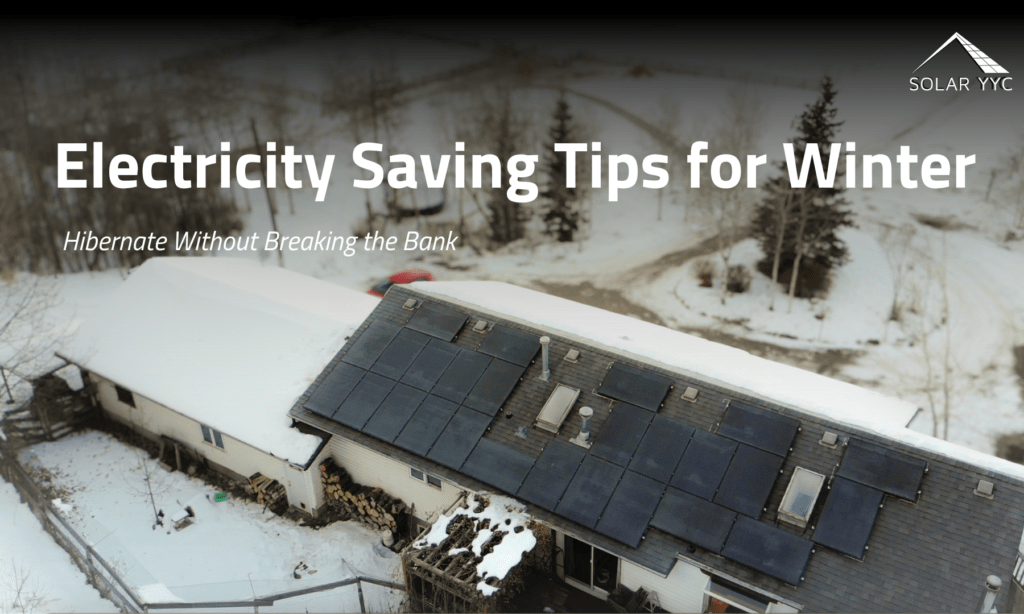
Introduction The New Year brings exciting opportunities for change and goal-setting—but it also brings the coldest temperatures of the year. At Solar YYC, we want to help you make the most of your solar investment. Even if you haven’t switched to solar yet, we’re committed to supporting our community in reducing electricity consumption and saving money. January’s frigid temperatures and early sunsets mean more time indoors. Staying warm is essential, but increased indoor activity often drives up electricity use and leads to higher energy bills. You’ve probably heard the usual advice—turn off lights, unplug unused appliances—but we don’t want to bore you with the obvious. Instead, here are some practical, realistic electricity-saving tips to keep you cozy this winter without overspending. (Remember: Switching to solar energy remains the best way to cut electricity costs and gain long-term savings. Pairing solar power with these energy-saving strategies maximizes your system’s value. Check out the owners manual for more information) Bathroom fans can consume more energy than you think. Installing timed switches ensures they automatically turn off after a set period, preventing unnecessary electricity use. With longer nights, lighting tends to increase in winter. Switch to energy-efficient LED bulbs, which use up to 75% less electricity than traditional incandescent bulbs and, therefore, last nearly 25 times longer. Consider using timers or motion sensors to ensure lights are only on when needed.  A programmable or smart thermostat helps optimize heating by adjusting temperatures based on your schedule. Lowering the thermostat by just a few degrees when you’re asleep or away can significantly cut energy consumption. Many modern thermostats even allow remote control from your smartphone, making it easier to manage your energy use. Gaps around windows, doors, and other openings allow cold air to enter and warm air to exit your home. Use weatherstripping or caulking to seal these gaps. Consider installing draft stoppers at the base of doors and insulating your windows with thermal film to maintain a comfortable indoor temperature without overworking your heating system. If you own an electric vehicle, consider charging it at public charging stations rather than at home during peak times. This can help lower your overall electricity costs and reduce strain on your home system. Working from home will inevitably drive consumption. Consider heading to the office for a much needed change of scenery – not only will you be lowering your electricity bill at home, you’ll combat seasonal blues by socializing and getting out of the house.  Additional Tips for Solar Panel Owners For solar panel owners, running heavy appliances like dishwashers, washing machines, and dryers during solar hours—the peak times when your solar panels generate the most electricity (typically mid-morning to late afternoon)—maximizes your use of free solar power. This reduces reliance on grid electricity and increases your energy savings. Consider scheduling these tasks to align with sunny periods for the best results. Conclusion By implementing these electricity-saving tips, you can stay warm and cozy throughout Calgary’s winter while reducing your energy consumption. However, the most impactful step you can take is transitioning to solar energy—it remains the top recommendation for energy savings and sustainability. Modern solar systems perform efficiently even in cold climates, especially for Alberta residents, who benefit from sunshine year-round.  Start your journey toward lower bills and a sustainable future today! Ready to explore your solar options? Contact us today for a free consultation, and let’s build a system that works for you.

Solar Club: How It Saves You Money

New clients are often eager to to maximize savings from the start and minimize the payback period. We understand that going solar is a significant investment, which is why joining Solar Club is a smart way to begin earning money as soon as your panels start generating energy.  At Solar YYC, we’re dedicated to helping our customers maximize the value of their solar energy systems. One of the best ways to do this is by joining the Solar Club™, a loyalty program designed specifically for Alberta’s solar micro-generators. With Solar Club, you can earn more from the energy you produce, reduce your payback period, and contribute to a sustainable electricity grid. Here’s everything you need to know about Solar Club, from its benefits to how to join. Top Benefits of Joining Solar Club With Solar Club, you can switch between high and low export rates. High Export Rate (30.04¢/kWh) for surplus energy generated during sunny months and a Low Export Rate (9.454¢/kWh) when your usage exceeds your generation in winter. This flexibility allows you to maximize your earnings throughout the year. Solar Club members receive 3% cash back on all energy imported from the grid. This cashback is calculated annually and paid out via direct deposit in February of the following year—a bonus for balancing your energy needs. As a member, you can sell the carbon credits generated by your system through Solar Club’s Carbon Offset Credit Platform. This provides an additional income stream while supporting Alberta’s sustainability goals. Choose the date for your monthly invoices to be withdrawn from your account. You can use your micro-generation credit balance to pay off upcoming invoices and/or offset your gas bill.  If you’re starting your solar journey, Solar Club’s Pre-Solar Rate™ (6.694¢/kWh) ensures you benefit while waiting for your system to be fully operational. This rate is valid for up to 180 days and transitions to the Low Export Rate once your installation is ready. This graph clearly illustrates the difference between production and consumption throughout the year.  The yellow bars represent the months when you are a net exporter, producing more energy than you consume. Meanwhile, the black bars indicate the months when you are a net importer, consuming more energy than your solar panels generate. Understanding this balance is key to improving your financial outcome with Solar Club, especially when switching between High and Low Rates. How to Optimize Your Solar Savings What Is Solar Club? Solar Club is a unique program created to help solar array owners like you make the most of your system. It’s part of the Utility Network & Partners Inc. (UTILITYnet) group, a trusted Alberta-based energy management company with over 45 years of experience. Solar Club builds on the foundation of Green Alberta Energy’s initiatives, giving micro-generators a way to actively participate in greening the grid. How to Join Solar Club To qualify for Solar Club, you need: Signing up is simple. Visit the Solar Club website or contact one of our Solar YYC sales consultants for assistance in enrolling and linking your micro-generation account. Why Solar Club? Solar Club isn’t just about saving money; it’s about helping Albertans take complete control of their energy production. By joining, you’ll shorten your payback period, increase your financial returns, and contribute to a more sustainable future for our province. Learn More For more details, check out the full YouTube video! Our sales consultant, Grady Topak, provides in-depth explanations and visuals to help you better understand the financial benefits of Solar Club. Ready to maximize your solar investment? Visit Solar Club’s website or contact Solar YYC to learn more. Click here for a free estimate: https://solaryyc.ca/free-solar-power-quote/ Let’s make your solar journey even more rewarding!

Image of hand signing a mortgage document. Text on top reads: How the CMHC Eco Improvement refund can save you thousands.

Boost Your Solar Savings with your Mortgage Insurance

Boost Your Solar Savings with CMHC’s Eco Improvement 25% Rebate! If you’re planning to install solar panels on your home, here’s some great news: CMHC’s Eco Improvement program offers a 25% rebate on your mortgage insurance premium when you complete $20,000 or more of energy efficiency upgrades to your home. And yes, solar systems installed by Solar YYC are eligible! What is CMHC Mortgage Insurance? Canada Mortgage and Housing Corporation (CMHC) mortgage insurance is required for homebuyers who make a down payment of less than 20% of the home’s purchase price. This insurance protects the lender in case the borrower defaults on their mortgage. CMHC insurance premiums can be substantial, often costing tens of thousands of dollars, depending on the size of the mortgage. In southern Alberta, the average CMHC insurance premium ranges from $15,000 to $25,000. Maximize Your Savings with Solar YYC and the Eco Improvement 25% Rebate That’s where Solar YYC can really make a difference. By choosing Solar YYC to install your solar system, you not only reduce your power bill but also position yourself to take advantage of CMHC’s Eco Improvement rebate. With rebates averaging between $3,750 and $6,250, you’ll save even more on your mortgage insurance! Why Go Solar with Solar YYC? At Solar YYC, we pride ourselves on offering top-notch solar installations that deliver long-term value. Solar systems don’t just cut your power bills—they represent a solid investment that pays off in multiple ways. With the added benefit of CMHC’s Eco Improvement rebate, you can significantly reduce your mortgage insurance premium on top of your energy savings. Here’s how it works: after closing on your mortgage, eligible borrowers have two years to submit a refund request through the Eco Improvement program. Simply visit CMHC’s Eco Products page for more details and instructions on how to apply. Solar YYC will guide you through the process and help you ensure your solar installation meets the eligibility requirements. How the Rebate Impacts Your Solar ROI with Solar YYC When you combine Solar YYC’s high-quality solar installations with CMHC’s Eco Improvement rebate, the return on your investment becomes even more attractive. The rebate, along with the energy savings from solar, can dramatically shorten your solar system’s payback period, putting more money in your pocket sooner. To learn more about how Solar YYC can help you maximize your savings and take full advantage of the CMHC Eco Improvement rebate, reach out to one of our solar consultants today! We’ll walk you through the rebate process and show you how going solar with Solar YYC can make a big difference in your home’s energy efficiency and your bottom line. Take advantage of this opportunity to lower both your energy bills and mortgage costs with Solar YYC! Don’t have a solar consultant? Let’s get in touch! Fill out our intake form and we’ll reach out to you shortly.

Why We Don’t Promise Over 100% Offset

written by Kennedy Davies, Solar Consultant When considering solar power for your home or farm, you may have come across solar installation companies that promise over 100% offset in energy production. While it might be tempting to think bigger is better, that number can sometimes be deceiving. Often times, if you’re being promised over 100% in Calgary by your solar design (and that design has been approved by your wire provider) the end result is far less than that originally promised number.  At Solar YYC we never over promise when it comes to your solar system’s capacity. Sometimes this authenticity can lead to us losing a sale since our designs may not always have the highest offset percentages displayed. Even so, we prefer to operate being able to guarantee that our designs are 99.75% accurate (a stat we have worked hard to maintain since 2016).  But why can’t my Calgary home produce over 100% offset?  The short of it is that the Alberta Utilities Commission (AUC) has set guidelines against it. This leads to another question… why would the AUC not want homes to generate more electricity than they require? The answer to this question is two fold:  At Solar YYC we have successfully navigated over 1,000 project approvals in Calgary alone, and work closely with Enmax to ensure that the designs we submit adhere to the Regulatory Approval processes they are governed by so that they never (or rarely) get denied. Overpromising could lead to project declines, unnecessary delays, and ultimately, customer dissatisfaction—something we’re committed to avoiding. A surefire way to get a permit denied is to promise well over your home’s consumption on a design (ie. over 100% offset).  Ok, sure that’s great, but my system design is well over 100% and still got approved by our Calgary wire provider… how do you explain that? In some cases, you may find that a system designed for 100%+ of your energy needs gets approved. How is this possible? It comes down to the system’s capacity to produce energy, which is ultimately limited by the AC inverters. To break it down, as an example, even if your solar panels are generating 500 watts of power, your inverters may only be able to convert 350 watts into AC current, depending on their capacity. This concept, known as “clipping,” is an industry best practice within 10-20%*,1 and your wire providers can see that in your system’s design. Some systems may have a much higer clipping percentage than is necessary, and therefore makes your system appear to be more capable than it is. You see 107% production on the top line, but (if your system has been approved) we can almost guarantee that the reality of your system and your inverters will result in an offset much closer to 100% than it appears.  Another reason why your 100%+ system may have been approved is because you’re looking to add a new appliance to your home. To get approval for a larger system, you’ll need to provide proof of purchase (POP) for these appliances. For an EV, you’ll also need to provide registration and insurance documentation. This way, the additional energy consumption is factored into your system design, ensuring it meets AUC guidelines. Great, so… now what? If you’ve received a quote from another vendor that seems too good to be true, it probably is. At Solar YYC, we’re always here to help you read through your quotes—even if they’re from another company. We believe in transparency and want to ensure you’re making an informed decision that meets your long-term energy needs, and, ultimately, we want you to get the best system possible for your home. Need some help looking through your designs? Shoot us a line and we will be more than happy to take you through any questions you may have.  Ready to explore your solar options? Contact us today for a free consultation, and let’s build a system that works for you.

Don’t Get Burned By Solar This Summer

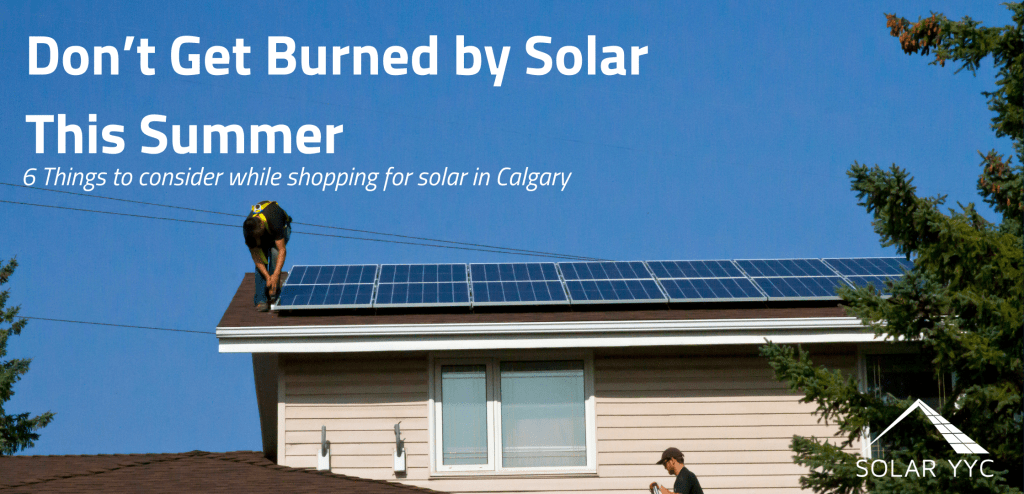
Here are 6 things to consider while shopping for your new solar system. Beware of pushy sales tactics. Solar is a big ticket renovation to your home, much like a new kitchen or bathroom. If you don’t hire the right team, the value and piece of mind it brings can turn into a headache overnight. Take your time when making such an important financial decision about your home. This might be one of the largest investments you make on your home, so make sure you never sign up “at the door”. Take your time and make sure you feel like you’ve had time to digest the information, ask any questions, and that you are fully comfortable with the next steps. We recommend that the best practice is to shop around – get a few quotes from reputable, local installers and move on from there. Industry standard does not require a deposit with a quote, so be wary of companies “locking you in” for a fee at the door, these are often predatory.  Check reviews! There will be a LOT of new solar sales and installation companies popping up in Calgary in the coming years as the industry grows. Take into account their reputation. How long have they been in the industry for? What are their customers saying about them? You can tell a lot about a company by their reviews. TIP: make sure to read through and ensure the reviews are genuine and from customers, not their staff! Do they subcontract out the install? There are two main ways that solar companies go about installation: through an in-house install team, or subcontracted out to a third-party installer. Although not always the case, there have been instances where the third-party installation company does a less-than-stellar job, and since the solar seller’s are not liable for the third-party installer’s practices, this leaves the home-owner high and dry with their problems. We recommend choosing a Solar Company that does both the solar sale and installation so all your warranties and customer service are in one place.  Do they follow safety standards? It only takes one OH&S violation to derail your entire project, or stop it completely! Feel free to ask your Solar Sales Rep about their company’s install safety practices. Great questions to ask: Do they space their panels with enough distance between to safely access the panels if maintenance is required? Do they require safety practices for the install team?  You can also tell a lot from the design: are the panels too close to or extended over the perimeter of your roof?  Is your quote accurate? Make sure what your solar sales rep is offering you is actually obtainable, and do your homework. Do they take into account the shade from the neighbour’s house or the large evergreen in your front yard? Cross reference quotes and ask your rep what the accuracy percentage is on their designs. If one company is offering you 103% offset with 8 panels, and another is offering you 98% with 12… the likely story is the 8-panel system is over-promising.  Do they offer a warranty? There is always a risk with any tech install that either the tech itself needs replacing, or the workmanship may need a re-do. Make sure both  your system and the work is under warranty. At the moment the best industry warranty that companies are offering is a 25 year workmanship warranty. –Written by Taylor Holbrook, Solar YYC

solar panels performance

How the Weather Impacts Your Solar Panel Performance

The weather conditions directly influence solar panel performance. Solar panels produce electricity by converting sunlight into usable energy through the photovoltaic cells the panels are made of. Therefore, any changes in sunlight intensity or exposure can affect their efficiency and output. Here are some key weather factors that impact solar panel performance you need to be aware of: Weather Conditions and Their Impact On Solar Panels Performance Sunlight Intensity The most critical weather factor that impacts solar panels’ energy production is the intensity of sunlight. Solar panels produce electricity at full capacity with direct and intense sunlight. Cloudy or overcast days reduce the sunlight reaching the panels, leading to lower energy production.  But don’t worry; this doesn’t mean your home won’t have electricity on cloudy days. Modern solar panels can work at more than 50% of their maximum output, which is usually more than enough. Temperature High temperatures can negatively impact solar panel efficiency. Solar panels work more efficiently in colder climates, but excessive heat can cause them to operate less effectively. As the temperature increases, the solar cells’ voltage decreases, reducing their overall efficiency. This is why Albertan weather is so optimal for solar panels: while our summer days are generally warm, the temperatures are rarely high enough to compromise solar panels’ performance. Rain and Snow Rain can have a short-term cleaning effect on solar panels, which may improve their performance by washing away some dust and debris. During heavy rain or snow, the panels can become covered or obscured, leading to a slight decrease in efficiency, as sunlight can still reach the panels through snow, and the rain will slide through them due to the inclination of the solar array. Hail Severe weather events like hail storms have the potential to physically damage solar panels, so manufacturers ensure they test panels for durability against such impacts. In extreme cases, damage could potentially occur but we should note that in the massive Calgary hailstorm of June 2020, none of our customers had panel damage. If your panels get damaged by hail, your warranty or your home insurance will cover the costs. Shading Obstacles such as buildings, trees, or other structures that cast shadows on solar panels can significantly impact their performance. Even partial shading of just a small area of a panel can result in a disproportionate drop in overall energy production. Installers always ensure the solar system is placed in an area free of shading in the first place, but if something changes and gets in the panels’ way, like an overgrown tree, you should prune it as soon as possible to reestablish your system’s performance. Power Regardless Of the Forecast Overall, solar panels can still generate electricity in all weather conditions. Advances in technology and improved panel designs continue to address weather-related challenges, making solar a viable and attractive renewable energy option. A professional installation is essential if you are ready to go solar and want to ensure your panels work despite the weather forecast. Professional installers will consider local weather conditions, panel orientation, and potential shading issues during installation to maximize the panels’ performance. Contact us for a free consultation and start your journey towards energy independence.

solar installer

10 Red Flags To Watch Out Before Hiring a Solar Installer

The solar energy market is booming, and there are far more solar installer companies to choose from than ever, which can overwhelm homeowners and lead them to do business with a company with questionable credentials. If you are researching to find a solar installer, read on and learn the main red flags you must be aware of when talking with solar companies. 10 Solar Installer Red Flags To Watch Out  1 – Insufficient Experience While every company starts from zero and newer solar installers can still provide quality service, choosing a company with a proven track record and experience is generally safer. Lack of experience may translate into a higher risk of errors or damage during installation. A good rule of thumb is to look for companies with 100 successful installs and above. 2 – Poor Customer Reviews Multiple negative reviews or low ratings in popular review platforms like Google Business Profile or Yelp can indicate a pattern of poor service, installation problems, or customer dissatisfaction. We recommend looking for companies with 4.5 and above online ratings and requesting previous clients’ references to the company directly. 3 – Absence of Portfolio Alongside good reviews, solar companies should be able to showcase their work. Good companies document their installations with photos and videos of the finished projects to prove their skill to future customers, and they’ll happily provide them to you. 4 – Pushy Sale Tactics Getting solar panels is a major investment; you deserve the time to decide, and trustworthy companies respect that. Be wary of installers who employ high-pressure sales tactics, such as offering limited-time deals or insisting on immediate commitments. 5 – Lack of Site Assessment A proper site assessment is essential to determine the feasibility and optimal design of a solar system for your property. If an installer skips or overlooks this step, it may indicate a lack of professionalism and attention to detail. 6 – Lack of Transparency in Pricing and Contracts A reliable solar installer should provide detailed information about the system’s total cost, including equipment, installation, and any additional fees. If the pricing or contract terms are unclear or ambiguous, it’s a potential red flag. 7 – Inadequate (Or Lack Of) Insurance Coverage Good solar companies count on appropriate insurance coverage, including general liability insurance and worker’s insurance. Request proof of insurance before signing any agreement.  8 – Limited or No Warranty A good solar installer should offer warranties for the solar system materials and the installation workmanship. Be cautious if the installer doesn’t provide any warranty or offers an unusually short period.  9 – Unusual Payments Be wary if a company insists on a significant upfront payment. Reputable installers typically offer a reasonable payment schedule. 10 – Extremely Low Prices Be skeptical if a company offers you unusually lower prices than average or tries to lure you with a “price-beat” policy. Companies may be able to offer such bargain prices by cutting down costs on materials or unqualified personnel. Choose Your Solar Installer With Confidence Evaluating multiple solar installers is not easy, but having these red flags in mind will help you avoid falling for a shady company. We’ve also made a questionnaire for pre-screening solar companies that includes the essential questions you have to ask and extra pro tips that will guide you to find the best company to go solar on the right foot. 

buying a house with solar panels

Buying a House With Solar Panels? Here’s What You Need to Know

Buying a house with solar panels may seem a good choice because it’d save homebuyers from the hassle and upfront costs of the installation process, but that will depend on some key factors. If you are in the market for a new home and have your eyes on a house with solar panels, here’s what you need to know before deciding. 7 Essential Things to Know Before Buying a Solar-Powered Home 1 – Understand Solar Energy Do your research on how a solar system works. Inform yourself on how the solar panels produce energy, how the system is connected to the electric grid, how solar net metering works, and the micro-generation program key aspects to know what it means for you in terms of energy production and financial benefits. 2 – System Details Ask for a copy of the installer agreement and look for details such as the age and model of the panels and inverters. Find out if they have required  maintenance and service. If the panels are older, consider their remaining lifespan and potential maintenance or replacement costs. 3 – Energy Production You need to know if the solar system will positively impact your utility bills. Request the current homeowner’s previous energy bills to assess the system’s effectiveness and determine if it meets your energy needs and utility-saving goals. Evaluate the system’s capacity and whether it aligns with your expected electricity consumption. 4 – Warranty Warranty protection is a must when it comes to a pre-existing solar system. Understand the coverage period, the components included, and limitations or conditions. A comprehensive warranty will provide peace of mind and save you from unexpected repair or replacement costs. 5 – Installation Quality  Assess the quality of the solar panels’ installation. Ensure that it meets industry standards and has been installed by reputable professionals. A poor installation can lead to performance issues and potential safety concerns. If you are unsure of the system’s current state, contact the solar company that did the installation. 6 – Roof Condition During the home inspection, make sure the roof’s condition is assessed thoroughly. Look for any signs of damage, leaks, or aging. Consider if the roof will require repair or replacement in the near future, as it can affect the solar system’s integrity and the overall benefits of buying a home with pre-installed panels. 7 – Transferability and Resale Value Whether you choose to sell your house or not, researching how much solar panels enhance the resale value of homes in the area is a good idea to know the quality of your investment. Understanding the impact on your property value can help you make an informed investment. The Bottom Line Solar energy adoption is growing rapidly in Alberta, and homes with solar panels listed for sale are getting more common on the real estate market. With education and due diligence, you can purchase a solar-powered home with confidence in the financial and quality-of-life benefits it will provide you and your family.

Solar Energy Vs Fossil Fuels

The Environmental Impact Of Solar Energy Vs Fossil Fuels

The way we produce energy is changing, and our environment is one of the main motivations behind the shift. However, the general public is still unsure if switching to alternative energy sources like solar is the best choice, especially when fossil fuels like coal, oil and natural gas are considered reliable and have powered human activities for decades.  Solar energy and fossil fuels have distinct environmental impacts, and comparing them provides insights into their advantages and disadvantages to help you make an informed decision. Here’s a comparison of their environmental impacts: Solar Energy Vs Fossil Fuels: Which One Is Better For the Environment? Greenhouse Gas Emissions Greenhouse gases are those released into the atmosphere that have the potential to trap heat and contribute to the greenhouse effect and subsequent warming of the planet’s surface. The primary greenhouse gasses include carbon dioxide (CO2), Methane (CH4), Nitrous Oxide (N2O) and Fluorinated Gases.  Solar Energy Fossil Fuels Solar energy is considered a clean and renewable energy source, as solar panels generate electricity without emitting greenhouse gases during operation. The manufacturing process of solar panels produces some emissions, but these are significantly lower than fossil fuel extraction and combustion. Fossil fuels produce energy through combustion, which releases significant amounts of carbon dioxide (CO2) into the atmosphere, the most prevalent greenhouse gas. Methane and fluorinated gases are also detrimental byproducts of fossil fuel use. Air Pollution Air pollution is caused by natural processes and human activities, including industrial, agricultural, and residential. Sulfur dioxide (SO2), nitrogen oxides (NOx), particulate matter (PM), volatile organic compounds (VOCs), and hazardous air pollutants (HAPs) are among the primary air pollutants. Solar Energy Fossil Fuels Solar energy generation does not contribute to air pollution as solar panels produce no emissions during operation. Burning fossil fuels for energy production releases various air pollutants, including SO2, NOx, particulate matter, and even mercury. These pollutants can have severe health impacts and contribute to smog formation. Water Usage Indiscriminate water usage has various environmental impacts, including pollution, ecosystem disruption, habitat destruction, and altered hydrological cycles.  Solar Energy Fossil Fuels Solar panels generally do not require water for electricity generation, except when water is used for panel cleaning or cooling purposes. However, this water usage is minimal. Fossil fuel power plants often require substantial amounts of water for cooling and steam generation. Moreover, other water-intensive processes like hydraulic fracturing (fracking) for natural gas and oil extraction also put additional strain on water resources. For example, a fracking operation in the Horn River Basin in British Columbia is reported to have used 15.8 million gallons of water. The water used for fracking is mainly fresh water from surface and underground sources, which can lead to drinking water shortages in the surrounding regions. Land and Habitat Impact Human activities, such as agriculture, deforestation, urbanization, or mining, are the main causes of habitat destruction. Habitat destruction has far-reaching consequences for both the environment and the species and people that depend on these habitats, including loss of biodiversity, species extinction, and negative impacts on indigenous and local communities. Solar Energy Fossil Fuels Solar installations typically require land space, particularly for utility-scale projects. However, solar panels can be installed on various surfaces, including rooftops, without significant land disturbance. Proper planning can minimize habitat disruption and enable coexistence with agriculture and other activities. The extraction, transportation, and processing of fossil fuels can destroy habitat, especially in ecologically sensitive areas such as forests and wetlands. Oil spills and mining activities can have severe consequences for wildlife and ecosystems. Solar Energy Helps Save the Planet  Switching to solar has clear environmental benefits. The initial manufacturing impact is greatly offset by decades of clean energy production, and with the ongoing technological improvements, the overall sustainability of solar energy is constantly improving.  If you’re ready to protect our planet for future generations, and lower your electricity bills at the same time, book a free, no-pressure consultation and start your solar energy journey. 

Solar Panels Manufacturing

Solar Panels Manufacturing: How It Impacts the Environment?

Solar panels are often marketed as a clean, sustainable way to take advantage of sunlight. While solar power production produces zero emissions, the manufacturing process of solar panels can impact the environment, which concerns many environmentally conscious people interested in going solar.  If this resonates with you, keep reading to get a full scope of the actual impact solar panel manufacturing has. The Real Impact of Solar Panels Manufacturing The good news is, solar panels are 90% recyclable. However, solar panel manufacturing does have positive and negative impacts on the environment. Here are some key points to consider: Mining Solar panels are made of glass, silicon, plastic/polymers, and metals like silver, cadmium, aluminum, and copper. While glass and silicon are vastly available and easy to extract, mining metals produce greenhouse gas emissions that can cause water, soil, and air pollution and habitat destruction. Energy Consumption Solar panel manufacturing requires energy-consuming processes such as refining the raw materials, producing semiconductor wafers, and assembling the panels. If the energy used in manufacturing comes from non-renewable sources, it can contribute to greenhouse gas emissions and air pollution. However, solar panel technology advances have permitted the use of more renewable energy sources, and it is becoming the standard used in manufacturing. Chemical Use Solar panel production uses solvents and acids at different stages. Improper handling and disposal of these chemicals, especially toxic ones such as Cadmium Telluride (CdTe), can pose environmental risks if not managed carefully. However, many manufacturers are implementing sustainable practices and reducing the use of harmful substances. Water Use Some stages of solar panel manufacturing require significant water usage, particularly for cooling and cleaning processes. In areas where water scarcity is a concern, this could affect local water resources. Waste Generation Solar panel production generates silicon scraps, small amounts of metal, and chemical byproducts. Proper waste management and recycling practices are crucial to minimize the environmental impact. Recycling efforts have improved in recent years, allowing for the recovery of valuable materials and reducing waste sent to landfills. This includes used solar panels that ended their life cycle since, as we mentioned, solar panels are 90% recyclable. How Solar Panels Offset Their Manufacturing Emissions Solar panels can offset these emissions within 3 to 6 years, despite having a potentially polluting manufacturing process. Considering that solar panels can last 30 to 40 years, the power a solar system will generate during its lifetime offsets the carbon footprint it produces during manufacturing, something that other energy sources like coal, oil, and natural gas can’t do, as they’re responsible for over 40% of CO2 emissions from electricity and heat generation globally. Source: (IEA) Governments worldwide are shifting towards renewable energy sources like solar for various uses, including residential, to reduce dependence on fossil fuels and mitigate their environmental impacts. This has given rise to offering financial incentives and tax benefits to support solar adoption and other renewable energy sources in several countries. The Future of Energy Production Although solar panel manufacturing impacts the environment, the benefits in energy production and the reduction of greenhouse emissions compensate for the solar panels’ manufacture.  Solar technology has been improving consistently over the years, and manufacturers continually strive to improve their processes and develop alternatives that minimize environmental impact and reduce the use of hazardous substances. Undoubtedly, solar energy will play a significant role in our energy production to achieve a more sustainable future. With constant improvement and innovation, zero-emission manufacturing is not far away. If you are ready to be part of the (still) early adoption of solar energy, contact us for a free estimate of how much you can save with solar.