Solar

Understanding kW and kWh: Solar Energy Basics for Alberta Homeowners

If you’re considering solar power in Alberta — whether in Calgary, Edmonton, or a rural area — you’ll quickly come across two important terms: kW and kWh. While they look similar, they mean very different things. And misunderstanding the difference is one of the most common sources of confusion for homeowners exploring solar energy. At Solar YYC, part of our mission is to empower Alberta homeowners with clear, honest information. So let’s break it down in simple terms. What Is a kW? kW stands for kilowatt. This is a measurement of power — the rate at which energy is produced or used. In the context of solar, your system’s size is measured in kilowatts. For example, a typical residential solar system in Alberta might be 6 kW. This means that under ideal sunlight conditions, your system can produce 6 kilowatts of power at a given moment. Think of it like a car’s horsepower — it tells you the maximum output at any given time. What Is a kWh? kWh stands for kilowatt-hour. This is a measurement of energy — the amount of electricity used or produced over time. If your 6 kW system runs at full power for one hour, it will generate 6 kWh of electricity. Your utility bill is measured in kWh. So when you look at how much electricity your home uses each month or year, you’re seeing kilowatt-hours. A Quick Analogy of kW and kWh Think of it like this: You can drive 100 km/h (kW) for one hour and travel 100 km (kWh). The power is instantaneous; the energy is accumulated over time. Why the Difference Matters for Solar in Alberta Understanding this distinction is critical when designing and sizing a solar system. Here’s how: For example: Common Misunderstandings of kW and kWh ❌ “My home uses 10,000 kWh a year, so I need a 10,000 kW system.”✅ Actually, you might only need a 7–8 kW system to generate that much energy annually. ❌ “A bigger kW system means lower utility bills every day.”✅ True in general — but production varies day to day, especially in winter. Solar is a long-term play, measured year over year. How We Help You Understand Your Solar Potential At Solar YYC, we analyze your actual energy usage (in kWh) and design a system (in kW) tailored to your needs, your roof, and Alberta’s unique solar climate. We make it easy to understand how much power your system will generate — and what it means for your bottom line. Final Thoughts If you’re a homeowner in Calgary, Edmonton, or anywhere in Alberta, knowing the difference between kW and kWh will help you make smarter decisions about your solar investment. You don’t need to be an engineer — that’s our job — but having a basic understanding puts you in control.Still have questions about solar sizing, energy usage, or production estimates?Contact Solar YYC for a free quote and personalized solar analysis. We’ll explain everything — no jargon, no pressure, just clear answers.

How a Powerful Commercial Solar Project Transformed Yamnuska Wolfdog Sanctuary

The Yamnuska Wolfdog Sanctuary commercial solar project has been in development for about three years, and the team here is ecstatic to announce that it’s finally complete! This project represents a major milestone for both Yamnuska and our growing portfolio of commercial solar installations. The Yamnuska Wolfdog Sanctuary is located near the stunning Rocky Mountains, just outside Cochrane, Alberta. Their mission is to educate the public, rehabilitate, and rehome displaced wolfdogs, all of which is made possible on their 160-acre property. This vast land allows the sanctuary to provide spacious enclosures that respect the animals’ wild instincts and behavioral needs, helping to keep them mentally and physically healthy. In 2022, the Yamnuska team approached us with the idea of going solar. For them, sustainability has always been a priority. Not only would solar energy significantly lower their utility costs, but it would also align with their environmental goals by reducing their carbon footprint. At the time, we didn’t have many completed commercial solar projects to showcase, but thanks to the reputation of our residential work and strong word-of-mouth, we were fortunate to be awarded the opportunity. Over the next three years, the project underwent many revisions. In 2024, Bailey Clarke joined the team and helped guide it toward its final form. With Bailey’s leadership, the project evolved into a ground-mounted commercial solar system—a major milestone signaling we were close to completion. Once the contract was signed, we began the microgeneration (MG) process. A transformer upgrade was performed to handle the system’s inverter output. Installation began on June 9, 2025, and was completed just over a week later on June 18. Bailey played a crucial role in the project’s success. As our Head of Commercial Solar Projects, I decided to personally interview him to gain some insight into key decisions. Why ground mounts instead of roof mounts? To the first question, Bailey explained that although Yamnuska had originally built their shop with solar in mind, two major issues made a rooftop installation unworkable: tree coverage blocked both the south and east faces of the roof, and more importantly, the existing electrical panel was far too small to support the desired system size. A proposal to split the system was also dismissed due to its complexity and inefficiency. In the end, a ground mount was the most logical and effective commercial solar solution. Why did you choose the specific panels? When asked about the panel choice, Bailey said the JA 550 panels were selected because they allowed for balanced inverter configurations, were readily available (unlike the Longi panels), and, most importantly, offered the best cost-efficiency. If you could do it again, what would you do differently? To the final question—what he would do differently—Bailey said he would adjust the array spacing. While a tighter layout looked sharper, a more spaced-out array would likely have been more effective, especially for a crew working on such a long array for the first time. Despite initial installation challenges, our team, as always, found creative solutions and executed the commercial solar project with care. Bailey expressed pride in both the finished product and the dedication of our SolarYYC team. Our team had the opportunity to interview Alison Bortolon (Fund Development Manager) and Joel Cates (Facility Manager). Alison gave us insight into why solar made sense for Yamnuska. She told us how “switching to solar allowed for all our money to go directly to taking care of the dogs.” She further elaborated that solar has been incredible—not only does it remove the financial strain, allowing them to better care for the animals, but it also runs the freezers guilt-free, as they no longer have to worry about carbon emissions. Joel Cates echoed these sentiments, stating that going solar was both an environmental and cost-conscious decision. In his interview, he also highlighted the attention to detail of the array and how communication was handled. He told us that throughout the project, we were able to concisely explain everything in an easy-to-understand way. We answered every question and clearly communicated what we were working on, when, and where—bringing a strong sense of assurance to the Yamnuska team. This commercial solar project was an incredible success and a meaningful learning experience for everyone involved. We’re deeply grateful for the opportunity to contribute to Yamnuska’s mission. And the next time we visit, we’ll proudly point to the array and say, “Hey! SolarYYC built that.” For Yamnuska, commercial solar was the perfect fit. Feel free to reach out for a free consultation and see if commercial solar is the right fit for your business or organization too.

Why 2025 Is the Best Year to Go Solar in Calgary

Considering solar going solar in Calgary? You’re not alone—more homeowners than ever are making the switch to clean, renewable energy. Solar YYC proudly serves Calgary and area with top-tier solar installations. We’ve been part of the local community since 2016 and currently employ over 70 Calgarians. What makes us different? Why Calgary Is a Great City for Solar Calgary is one of Canada’s sunniest cities, with over 2,300 hours of sunlight each year. This makes it an ideal location for residential solar systems to produce reliable, year-round electricity. While we do get the occasional heavy snow, temporarily blocking production – we get Chinooks! As well, solar in Calgary, and Alberta, is really about the 16 hour days in the summer months. What Going Solar in Calgary Costs (2025) Solar YYC is very competitively priced with an average of just $2.10 per watt before GST. We’ve found the average Calgarian home needs an 8 kW system, so you’re looking at roughly $16,800+GST. We include: Add-ons like batteries, EV chargers, critter guard, snow guard, panel upgrades and home energy monitors can be incorporated as needed. Zero-Interest Financing Through the Greener Homes Loan One of the best parts about going solar in 2025 is access to the Canada Greener Homes Loan. This federal program provides up to $40,000 in interest-free financing, repayable over 10 years. It’s a great way to spread out your investment without the burden of high-interest loans. We’ll help you: Choosing a Solar Installer You Can Trust With more solar companies entering the Calgary market, it’s important to choose a provider with experience, transparency, and accountability. At Solar YYC: We focus on, education—not pressure, so you can make a confident, informed decision. We encourage all of our prospective clients to get multiple quotes. What the Installation Process Looks Like We manage every step of your install to make it as smooth and professional as possible: You’ll also receive access to real-time monitoring tools to track your solar production. Why Homeowners are Going Solar in Calgary Solar systems typically reduce monthly power bills by 50–90%, with payback periods of 8–12 years. And with the Canada Greener Homes Loan this means that most residential installations are cash-flow positive, day one, using government money, not yours! Maximize Your Returns With Solar Clubs Alberta’s deregulated electricity market allows solar homeowners to join what’s known as a solar club. These plans pay premium rates—often $0.25 to $0.30 per kWh—for exported electricity during times of excess generation. Solar clubs are ideal if your system is oversized or you generate more than you consume in summer. Solar YYC will provide guidance on which provider is best and how to sign up.  Sell Your Solar Credits Through RECs Another way to earn more from your system is through Renewable Energy Certificates (RECs). These environmental attributes can be sold to organizations looking to lower their carbon footprint—often through programs like Solar Offset. It’s a simple way to earn passive income from your clean energy. Applications are simple and quick and we’ll help you. Go Solar in Calgary! If you’re looking for a proven and reliable Calgary solar company, Solar YYC is here to help. We offer: 🔗 Fill out our lead intake form today and discover what solar can do for your home

Will You Need a Main Panel Upgrade to go Solar? Here’s how to tell

If you’re considering a solar panel installation in Calgary, Edmonton, or anywhere in Alberta, your installer might mention the need for a Main Panel Upgrade for Solar — also known as a main panel swap. But what does that actually mean, and why is it sometimes required for larger solar arrays? At Solar YYC, one of the most common questions we hear is:“Why do I need to change my electrical panel just to add solar?” The answer comes down to something called bus bar capacity — a technical but important factor in safely installing your solar energy system. What Is a Main Electrical Panel? Your main panel (also called the electrical service panel or breaker box) is the central hub where power enters your home from the grid. It distributes electricity to your lights, appliances, and outlets through individual breakers. Panels have two important ratings:– Service rating (e.g., 100A, 125A, 200A). Service rating is the capacity of the wire coming to your home from the local grid. This is generally difficult, and expensive, to upgrade.– Bus bar capacity — the metal strips inside the panel that carry electrical current When you install solar, you’re adding another source of electricity to this panel — and the panel must be rated to safely handle both the grid input and the solar input. What’s a Bus Bar and Why Does It Matter? The Canadian Electrical Code (CEC) Rule 64-112 outlines how renewable energy systems, such as solar, integrate into both new and existing electrical panels. The panel bus bar must be able to handle the combined current of the main breaker amperage (incoming from the grid) and the solar back-feed breaker amperage (incoming from solar system). Definition time! Safety Margin is the amount of additional capacity or strength built into a system beyond its expected or design load to ensure safe and reliable operation under unforeseen conditions or overloads For residential systems we are allowed to add a 25% safety margin for example: A main panel with 100A main breaker and a 125A bus bar would allow us to install 56.25A worth of solar PV breakers.  125A bus x 125% = 156.25A – 100A main breaker = 56.25A.  In 2025, and considering Solar YYC’s current offerings, this would equate to between 11.7kW and 13kW DC of solar. Or, 26 panels. For commercial systems we are only allowed a 20% safety margin: A main panel with 200A main breaker and a 200A bus bar would allow us to install up to 40A worth of solar breakers. 200A bus bar x 120% = 240A – 200A main breaker = 40A If the bus bar above is upgraded to 225A: 225A bus bar x 120% = 270A – 200A main breaker =70A Why Main Panel Upgrades for Solar Are Often Needed In Alberta, most homes were built with 100A panels with 125A bus bars, which worked fine when solar wasn’t common. But solar is becoming more powerful and cost-effective — and homeowners are aiming for full offset or near net-zero energy usage. IMPORTANT NOTE When solar companies talk about upgrading your panel it’s almost never the service size but rather just the busbar. A typical upgrade looks like this: 125A bus x 125% = 156.25A – 100A main breaker = 56.25A of room for solar. Or, 26 panels.  Upgrading the busbar to 225A: 225A bus x 125% = 281.25A – 100A main breaker = 181.25A of room for solar. Or, 50 panels.  By upgrading the bus we have doubled the capacity for solar. Do I Always Need a Main Panel Upgrade for Solar? Not necessarily. If your energy needs are modest, and your existing panel has space and bus bar room, we can often install solar without changes. But if you’re planning a larger system, a panel swap is usually the only option. At Solar YYC, we assess this for every project usually with a thorough site visit (free of charge!). Then we include upgrade recommendations in our quotes — with clear pricing. We also handle all permitting and coordination with the city and utility, whether you’re in Calgary, Edmonton, or elsewhere in Alberta. What does it cost and how long does it take? Typical main panel swaps cost $2500-3500 in Alberta in 2025. Although if there is a complicated/unique electrical setup it can cost more. It takes a day, generally, to swap out the main panel. The power to building (in a residential setting) generally needs to be turned off for this work. Solar YYC will provide back up power to essential loads during that time. Final Thoughts: Is It Worth It? A main panel upgrade for solar might sound like a hassle, but it’s a one-time investment that opens the door to:– Greatly increase capacity for solar systems (greater energy savings)– A modern, code-compliant electrical setup For many Alberta homeowners, it’s the key to unlocking the full potential of solar energy.Need help figuring out if your panel is solar-ready?Contact Solar YYC for a free solar assessment. We’ll check your panel, calculate your home’s needs, and give you honest advice — with or without a main panel swap.

Protect Your Solar Panels: Why Alberta Homes Need Critter Guards

When investing in solar panels for your home in Calgary, Edmonton, or anywhere in Alberta, one detail that often gets overlooked is critter protection. You may have heard terms like solar critter guard, rodent guard, or pigeon guard — but what exactly are they, and are they worth it? At Solar YYC, we believe in setting up solar systems that last — and that means protecting them from the most unexpected threats: animals. What Is a Solar Critter Guard? A solar critter guard (also called a rodent guard or pigeon guard) is a durable wire mesh that is installed around the edges of your rooftop solar array. Its main job is to keep out unwanted guests — usually birds and rodents — that try to nest underneath your panels. Without this guard, animals like pigeons, squirrels, and even magpies can squeeze under the panels and cause serious problems. These aren’t just annoyances — they can cause real, costly damage. Common Issues Without a Critter Guard – Chewed wiring – Rodents can gnaw on solar panel wiring, leading to power disruptions or full system outages. – Roof damage – Nesting animals displace shingles, clog eavestroughs, and create long-term water damage. – Pigeon waste buildup – Pigeon droppings are not only unsightly but highly corrosive and unsanitary. – Noise and nuisance – Nesting birds can create ongoing noise problems and mess around the property. All of these issues can drastically shorten the lifespan of your solar system or even void manufacturer warranties. Why We Recommend Critter Guards in Alberta In Southern and Central Alberta, the climate and architecture provide ideal nesting opportunities for pigeons and squirrels. Urban areas like Calgary and Edmonton see especially high bird activity, while rural properties often deal with rodents climbing up onto rooftops. That’s why we recommend a solar critter guard for nearly every rooftop solar installation. It’s a low-cost addition that provides long-term peace of mind. At Solar YYC, we install rodent guards on many new residential systems by default, and we offer retrofit pigeon guard installation for existing solar arrays as well. It doesn’t matter who installed your solar panels — we’re happy to add critter guard protection to any system, even if it wasn’t installed by us. We regularly work on third-party systems, including homes built by Jayman BUILT and Mattamy Homes, where solar panels came standard. Whether your system is brand new or several years old, we can help protect it from animal damage. Cost of Installing a Solar Critter Guard The cost of a rodent guard for solar panels depends on your system size and roof layout, but most homeowners in Calgary and Edmonton can expect: – Typical Price Range: $500-$1,500 – Retrofit Installation: Slightly higher due to access and setup time – New System Install: Often included or discounted when installing solar with Solar YYC Compared to the potential cost of repairs — or replacing damaged solar panels — a critter guard is an easy decision. Can I Add One to My Existing Solar System? Absolutely. If your system wasn’t originally protected with a pigeon guard, it’s not too late. Our team can safely install a guard without disturbing your current setup. Most retrofits are completed in just a few hours. We serve all of Calgary, Edmonton, and surrounding Alberta communities. Final Thoughts: Is It Worth It? For most Alberta homeowners, yes. A solar critter guard is one of the most affordable ways to protect your solar investment. Whether it’s birds nesting under your panels in Edmonton or squirrels chewing wires in Calgary, this simple mesh can prevent thousands of dollars in potential damage.Interested in protecting your solar system? Contact Solar YYC today for a free quote on pigeon guard or rodent guard installation in Calgary, Edmonton, or anywhere in Alberta — no matter who installed your panels.

Love Solar? Share the Sunshine & Get Rewarded!

At Solar YYC, we’re more than just a solar company—we’re building a community that supports each other. That’s why we’re excited to introduce our Solar Referral Program—a simple way for you to help your friends and family go solar while earning a $400 reward for yourself! Why Refer? Spread Savings in Our Community With economic uncertainty, solar can help families and neighbours save on energy costs and gain financial stability. Lower electricity bills and protection from rising energy rates make solar an investment that keeps on giving. Earn Extra Cash You can refer as many people as you like, so the rewards keep adding up! When you help someone make a significant investment, you get rewarded for it. Whether you use your referral bonuses for a special treat, home improvement, or savings, the extra cash is always a welcome bonus. Grow Our Solar Family Each referral means one more home benefiting from clean, renewable energy. By spreading the word, you help build a network of solar-powered homes in your community, contributing to a more sustainable future. How It Works Referring someone is easy! Here’s how you can start earning rewards: No Limits! The best part? There’s no limit to how many people you can refer! The more people you help switch to solar, the more rewards you earn. Case Study: A Street Powered by Solar Our referral program isn’t just theory—it’s already benefiting our customers! Here’s an example of how some of our clients took full advantage of it: On one street alone, seven homes have gone solar with Solar YYC. Five of these homes are side by side, with two more further down the same street. This shows how one person’s decision to go solar can inspire an entire neighbourhood to make the switch. Solar isn’t just an individual investment; it’s a community movement toward energy independence. Even more impressive, we currently have a referral chain that has extended to 10 people! One happy customer shared their experience with a friend, who then passed it along to another, creating a ripple effect of savings. Here is a photo of two neighbours that went solar together! Start Referring Today! Know someone who’s interested in solar? Send them our way and start earning your rewards. If you have any questions, feel free to contact us—we’d love to hear from you! Why Choose Solar YYC? At Solar YYC, we take pride in being Calgary’s trusted solar provider, with over 370 Google reviews and a 5-star rating. As a locally owned and operated business, we are committed to transparency and customer satisfaction from day one. We believe in clear communication and ensuring that every question, big or small, is answered with patience and care. Plus, with our 25-year installation warranty, you can know that your investment is protected in the long run. Don’t just take our word for it—check out our reviews and see why so many homeowners trust us with their solar journey. Let’s power a brighter future together. Ready to explore your solar options? Contact us today for a free consultation, and let’s build a system that works for you.

Navigating Your Solar Installation: What You Need to Know

The Solar Panel Installation Process: A Step-by-Step Guide The solar panel installation process is quite complex, involving many steps before placing the panels on the roof. The process begins months earlier, with drone visits on your property. Usually, the installation takes place 6 months after the contract has been signed. That is why you must begin your consultation in the winter if you want your solar panels installed in the spring or summer.  Here’s a behind-the-scenes look at what happens during a typical solar panel installation. 1. Arrival and Site Assessment The installation crew arrives on-site and begins with a job hazard assessment. This ensures the worksite is safe and potential risks are identified before the team starts work. They also take time to introduce themselves to the homeowner and conduct a walk-around inspection of the site to confirm everything is in order. 2. Roof Preparation and Layout Once the initial assessment is complete, the roof crew accesses the roof. They start by: Once the rails are properly installed and levelled, the inverters are mounted in their designated locations. 3. Electrical Work: Running the Wiring While the roof crew works on panel placement, the electricians will work on powering all the inverters: This step ensures that the energy collected by the solar panels can be safely transmitted to the home’s electrical system.  4. Panel Installation With the wiring in place, the team can now begin installing the solar panels: This step can be straightforward on simple roof layouts but becomes challenging when panels need to be placed on multiple arrays on roof faces or garage structures. 5. System Commissioning and Testing Once all panels are in place, the system is nearly ready to generate electricity. Before leaving, the crew performs the final steps: 6. Final Steps and Cleanup With the system now operational, the installation crew cleans up the worksite, removes ladders, and leaves the area tidy. Before leaving, they inform the homeowner about the upcoming system inspection and how to monitor their system using the app. How Long Does It Take? The duration of the installation depends on the project’s complexity (e.g., the number of arrays and the roof’s steepness). Challenges and Considerations Installing solar panels is a physically demanding job. Each panel weighs between 50 and 70 pounds, and carrying them up ladders onto a sloped roof requires strength and endurance. Weather conditions also play a role. Cold temperatures can make suction cups less effective for lifting panels, and high winds present challenges when securing equipment. Conclusion A solar installation is a carefully coordinated process that combines safety, technical skill, and teamwork. Every step, from the initial assessment to system activation, is crucial in ensuring a reliable and efficient solar energy system for the homeowner. If you’re considering switching to solar, understanding the installation process can help you appreciate the level of expertise that goes into making your system function seamlessly! Ready to explore your solar options? Contact us today for a free consultation, and let’s build a system that works for you.

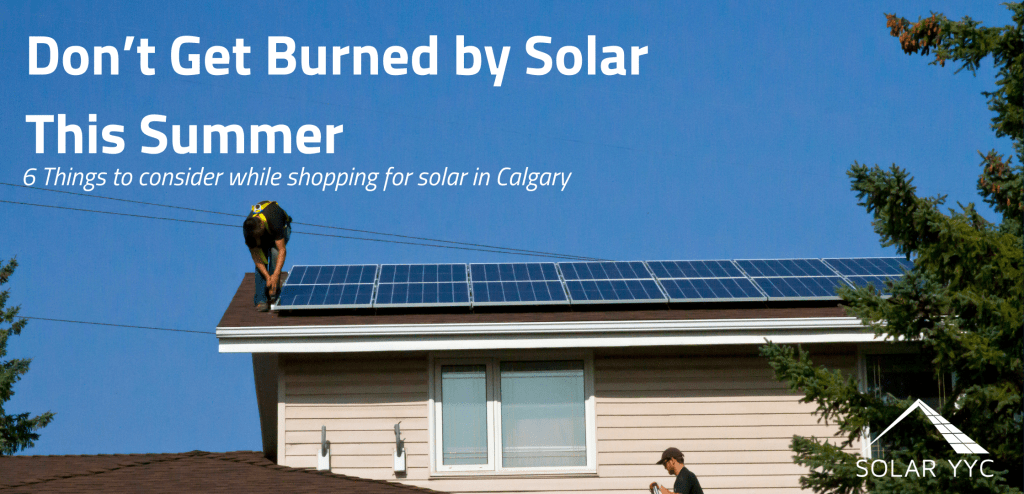
Don’t Get Burned By Solar This Summer

Here are 6 things to consider while shopping for your new solar system. Beware of pushy sales tactics. Solar is a big ticket renovation to your home, much like a new kitchen or bathroom. If you don’t hire the right team, the value and piece of mind it brings can turn into a headache overnight. Take your time when making such an important financial decision about your home. This might be one of the largest investments you make on your home, so make sure you never sign up “at the door”. Take your time and make sure you feel like you’ve had time to digest the information, ask any questions, and that you are fully comfortable with the next steps. We recommend that the best practice is to shop around – get a few quotes from reputable, local installers and move on from there. Industry standard does not require a deposit with a quote, so be wary of companies “locking you in” for a fee at the door, these are often predatory.  Check reviews! There will be a LOT of new solar sales and installation companies popping up in Calgary in the coming years as the industry grows. Take into account their reputation. How long have they been in the industry for? What are their customers saying about them? You can tell a lot about a company by their reviews. TIP: make sure to read through and ensure the reviews are genuine and from customers, not their staff! Do they subcontract out the install? There are two main ways that solar companies go about installation: through an in-house install team, or subcontracted out to a third-party installer. Although not always the case, there have been instances where the third-party installation company does a less-than-stellar job, and since the solar seller’s are not liable for the third-party installer’s practices, this leaves the home-owner high and dry with their problems. We recommend choosing a Solar Company that does both the solar sale and installation so all your warranties and customer service are in one place.  Do they follow safety standards? It only takes one OH&S violation to derail your entire project, or stop it completely! Feel free to ask your Solar Sales Rep about their company’s install safety practices. Great questions to ask: Do they space their panels with enough distance between to safely access the panels if maintenance is required? Do they require safety practices for the install team?  You can also tell a lot from the design: are the panels too close to or extended over the perimeter of your roof?  Is your quote accurate? Make sure what your solar sales rep is offering you is actually obtainable, and do your homework. Do they take into account the shade from the neighbour’s house or the large evergreen in your front yard? Cross reference quotes and ask your rep what the accuracy percentage is on their designs. If one company is offering you 103% offset with 8 panels, and another is offering you 98% with 12… the likely story is the 8-panel system is over-promising.  Do they offer a warranty? There is always a risk with any tech install that either the tech itself needs replacing, or the workmanship may need a re-do. Make sure both  your system and the work is under warranty. At the moment the best industry warranty that companies are offering is a 25 year workmanship warranty. –Written by Taylor Holbrook, Solar YYC