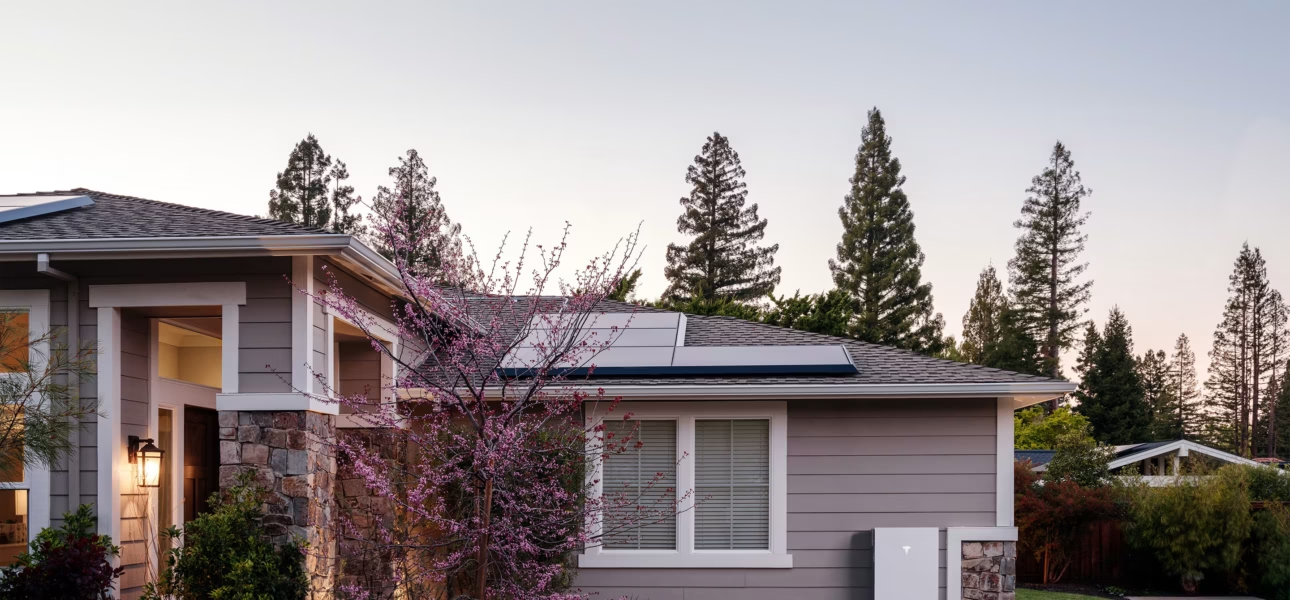
Battery storage allows homeowners to store their own clean energy, reduce their reliance on the grid, gain more control over how and when they use their electricity, and stay powered during outages.
If you’re considering solar or already have a system, you’ve likely heard of “energy independence.” While batteries play a key role in making this possible, a successful system starts with understanding how energy storage works and whether it’s the right solution for your home.
In this blog, we will break down solar battery storage in simple terms and explain how it operates alongside your solar panels. We’ll also explore how it offers your home greater flexibility and control over energy use while addressing the most frequently asked questions about solar batteries.
How Does Solar Work Without a Battery?
During the day, your solar panels convert sunlight into electricity, and your home uses that energy first before drawing any additional power from the grid. If your system produces more electricity than your home is using, the excess energy is sent back to the grid, where you earn credits through your electricity retailer.
At night or during low-production periods, your home will draw power from the grid as usual. Your earned credits help offset the cost of this electricity, though you still pay regulated delivery and distribution charges.
A common misconception is that solar panels provide power during a blackout. However, most systems automatically shut down when the grid goes offline to protect utility workers. This is where battery storage changes the game.
With Alberta’s incredible solar potential and long summer days, your panels can often produce more energy than your home uses during peak sunlight hours. A battery allows you to store that excess energy and keep it available for when the sun isn’t shining or when the grid goes down.
How does Solar Works With a Battery?
Instead of sending all of your excess solar energy back to the grid, a battery can store that electricity so it can be used later when your panels aren’t producing enough power or provide backup power during an outage.
How that stored energy is used depends on your battery settings, which can be adjusted through the batteries app. Some homeowners choose to keep their battery capacity reserved primarily for emergency backup power. In this setup, the solar system continues operating like a standard grid-tied system, sending excess energy back to the grid while the battery stays charged and available for an outage.
Other homeowners choose to use their battery daily, allowing stored energy to power their home during the evening or periods of lower solar production while keeping a reserve available for emergencies.
A battery simply adds a storage option for the excess energy your solar panels generate. How that stored energy is used depends on the homeowner’s energy goals and preferences.
Different Battery Options for Different Energy Needs
Battery systems are highly customizable, allowing you to tailor your storage capacity to your home’s energy needs, budget, and backup goals.
Unlike solar panels, where pricing scales with the size of the installation, battery costs are typically fixed per unit. Your total investment depends on the specific technology you choose and the number of units required to meet your goals.
Now let’s talk about different batteries for different levels of backup.
Partial Home Backup
A partial home backup is a more budget-friendly choice for homeowners who want to prioritize essential circuits during a power outage. This setup ensures that critical items such as your refrigerator, furnace, Wi-Fi, and select lights remain operational when the grid goes down.
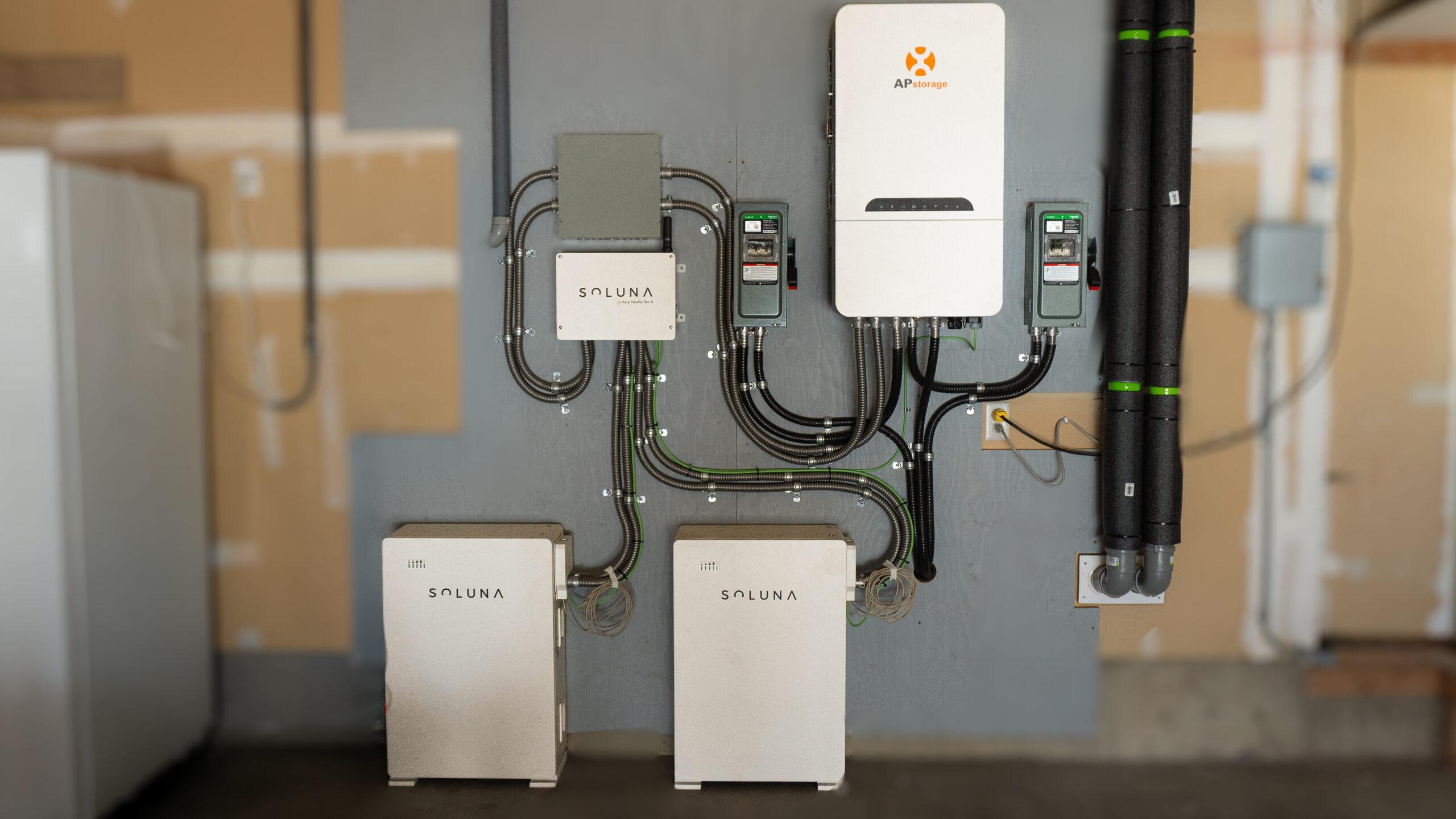
By focusing on these key outputs rather than the entire house, you can maintain comfort and safety without the higher cost of a larger storage system. For example, a single Soluna battery for a partial backup typically starts around $15,000, while a two-particle home battery may range up to $19,000, fully installed.
Whole Home Backup
For homeowners seeking total energy independence and peace of mind, a whole-home backup system ensures every outlet and appliance remains live. Batteries like the Tesla Powerwall are designed to handle heavier household loads, including air conditioners and electric dryers.
Because of the increased capacity and specialized integration required, these systems generally cost between $20,000 and $25,000 per battery.
No matter which battery you go with, they usually end up in the same spot. Most of the time, that’s your garage on a fire-rated wall with a self-closing door to meet local safety rules.
Lifespan & Warranty of Battery Storage
Like a smartphone, a solar battery’s lifespan is influenced by its charging cycles. Over time, repeated charging and discharging can lead to gradual degradation, though modern solar batteries are designed to operate efficiently for well over a decade.
To protect this investment, manufacturers provide warranties. For example, a Soluna battery includes a 10-year warranty or a limit of 8,000 cycles (where one cycle represents a full charge and discharge of a battery). At a rate of one cycle per day, 8,000 cycles could theoretically provide over 20 years of covered performance.
Batteries are built to last, and everyday usage typically has only a small impact on their overall lifespan. However, how frequently and deeply a battery is discharged can affect long-term performance. Battery preservation settings help reduce stress on the system by limiting how high the battery charges and how low it discharges during normal use. For example, some settings may keep the battery around 80% capacity and prevent it from dropping to 0% unless backup power is needed during an emergency.
How to Customize Your Battery Settings
One of the benefits of battery storage is that it can be customized around your household’s energy needs with ease.
Many battery systems allow homeowners to choose how their stored energy is used. Some homeowners may prioritize keeping more energy available for emergency backup, while others may choose to use more stored energy daily to reduce their reliance on the grid.
For example, a homeowner could reserve 100% of their battery capacity for an outage, meaning the battery remains fully charged until it is needed. Another option is a 50/50 setup, where half of the battery capacity is available for daily use during evenings or periods of low production, while the other half remains reserved for emergencies. Some homeowners only charge their battery to 80% to preserve the lifespan of their battery.
These settings can easily be adjusted through the battery app as your needs change. Homeowners can monitor their energy usage, storage levels, and how their battery is being used.
Another advantage of battery storage is built-in consumption monitoring, which shows exactly how your home is using energy. This helps homeowners understand how much energy their panels generate, how much they use, how much is stored, and how much is sent back to the grid.
Is a Solar Battery Right for Everyone?
A solar battery is not a required addition to every solar installation. A basic solar panel system without a battery is a great option for many homeowners.
Solar panels are already a powerful way to take control of your energy costs, but battery storage gives homeowners more flexibility in how they use the energy they produce and provides extra reassurance during power outages.
Whether your goal is preparing for power outages, understanding your usage, reducing your reliance on the grid, or making the most of your home’s clean energy production, battery storage can help you take another step toward a more flexible and independent energy future.
Visit our battery storage page for more information here: https://solaryyc.ca/battery-backup/
Book a no-obligation consultation to explore battery solutions for your home: https://solaryyc.ca/free-solar-power-quote/